
Building Florida’s Future: The Importance of Infrastructure Development
Florida continues to be one of the fastest growing and most dynamic states in the country. From expanding communities and growing business corridors to increased tourism and freight movement, the demand on Florida’s infrastructure has never been greater. Roads, bridges, utilities, drainage systems, airports, ports, and public facilities all play a major role in keeping the state moving.
Infrastructure development is more than construction. It is the foundation for economic growth, safer communities, and a better quality of life.
Supporting a Growing Population
As more people move to Florida, cities and counties must continue investing in infrastructure that can support long-term growth. Expanding roadways, improving intersections, upgrading utilities, and modernizing public systems help communities manage increased demand while reducing congestion and improving safety.
Well-planned infrastructure allows neighborhoods, businesses, schools, and public services to function more efficiently. Without these improvements, growth can quickly lead to traffic delays, aging utility systems, and added pressure on local resources.
Strengthening Florida’s Economy
Florida’s economy depends heavily on the movement of people, materials, and goods. Strong infrastructure supports industries such as construction, logistics, tourism, agriculture, manufacturing, and real estate development.
The Florida Department of Transportation’s Strategic Intermodal System focuses on high-priority transportation facilities that are important to the state’s mobility and economy, including major highways, airports, seaports, rail systems, and freight corridors. These connections are critical for keeping Florida competitive and helping businesses operate efficiently.
Recent transportation investments in Florida continue to focus on relieving congestion, supporting supply chains, and improving economic competitiveness. These projects help create jobs, attract private investment, and make it easier for businesses to grow throughout the state.
Improving Safety and Accessibility
Infrastructure development also plays a key role in public safety. Road widening, signal improvements, sidewalk construction, drainage upgrades, lighting improvements, and bridge maintenance all help create safer conditions for drivers, pedestrians, cyclists, and workers.
Accessibility is another important factor. As communities expand, infrastructure must be designed to serve residents of all ages and abilities. This includes safe pedestrian routes, ADA-compliant improvements, reliable transportation access, and better connections between residential, commercial, and public spaces.
Preparing for Florida’s Climate and Weather
Florida faces unique infrastructure challenges because of heavy rainfall, hurricanes, flooding, coastal conditions, and intense heat. Durable and resilient infrastructure is essential for protecting communities and reducing long-term repair costs.
Drainage systems, stormwater management, road elevations, utility protection, and resilient building practices all help Florida communities prepare for severe weather events. Investing in stronger infrastructure today can help reduce disruptions and improve recovery after storms.
Building Smarter Communities
Modern infrastructure is not just about building more — it is about building smarter. Technology, better planning, improved materials, and coordinated project management allow infrastructure projects to be completed more efficiently and with long-term value in mind.
Smart infrastructure planning helps communities reduce future maintenance costs, improve traffic flow, support responsible development, and create spaces that work better for residents and businesses.
The Future of Infrastructure in Florida
Florida’s continued success depends on thoughtful infrastructure development. As the state grows, public and private sectors must work together to build systems that are safe, efficient, resilient, and prepared for the future.
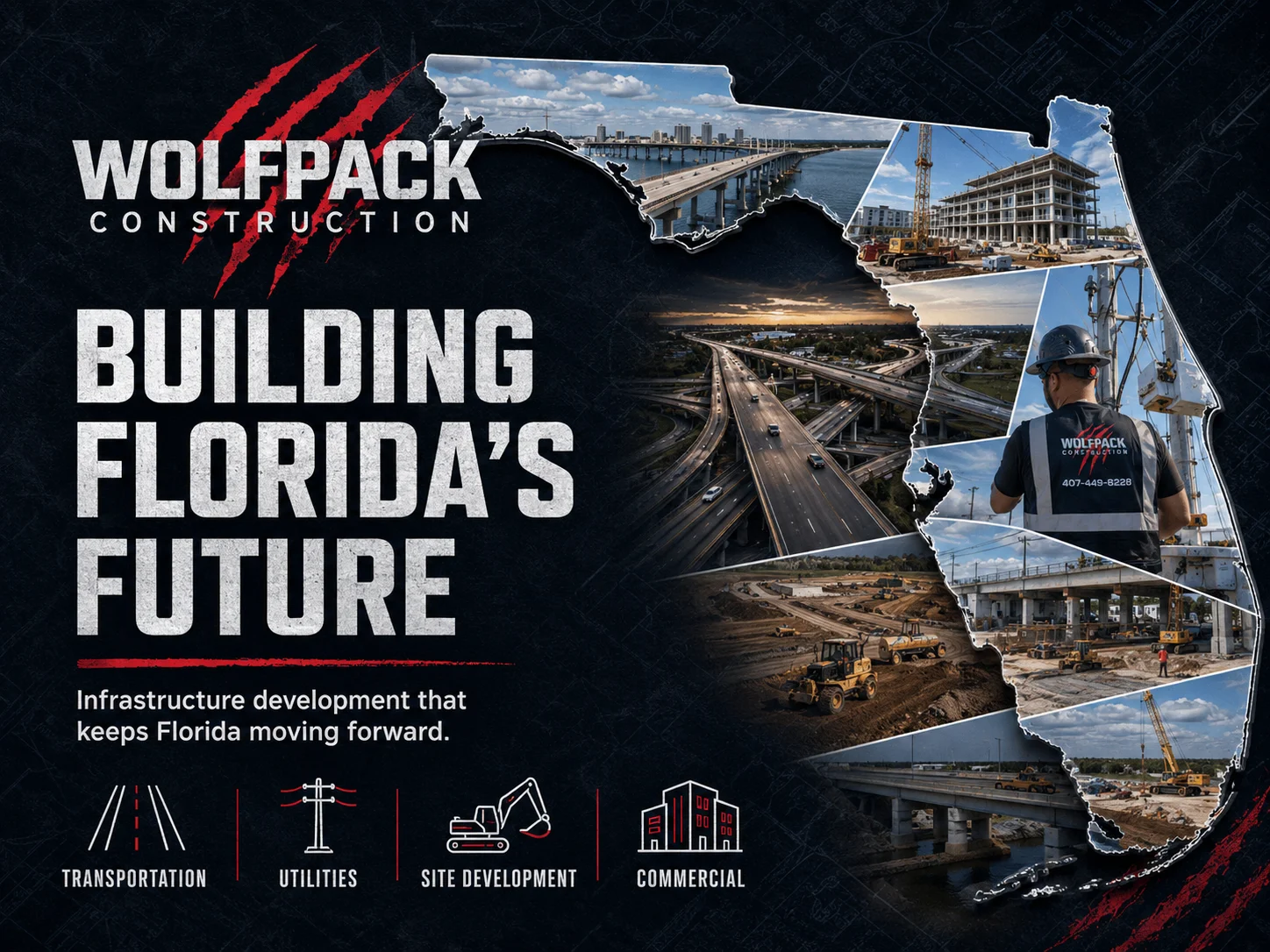
From transportation improvements to utility upgrades and site development, infrastructure is what connects communities and supports progress. Every road, bridge, drainage system, and public improvement contributes to a stronger Florida.
Investing in infrastructure today means building a better, safer, and more connected Florida for tomorrow.