
Orlando International Airport Expansion: How MCO Is Building for Central Florida’s Future
Orlando International Airport is more than a place people fly in and out of. It is one of the most important economic engines in Central Florida. Every year, millions of visitors, business travelers, residents, contractors, and suppliers move through MCO, making it a critical part of Orlando’s infrastructure story.
As Central Florida continues to grow, MCO has had to grow with it. The airport’s ongoing expansion and modernization efforts are not just about improving travel. They are about preparing Orlando for the next generation of tourism, business development, logistics, and regional growth.
For property owners, investors, contractors, and business leaders, MCO is a major signal of where Central Florida is headed.
Why MCO Matters to Orlando’s Growth
Orlando’s economy depends on movement. Tourism, hospitality, conventions, real estate, construction, logistics, healthcare, and commercial development all rely on the ability to move people and materials efficiently.
MCO sits at the center of that movement. It connects Orlando to domestic and international markets, supports the theme park and hospitality industries, and helps drive demand for hotels, restaurants, retail spaces, transportation services, and commercial buildouts.
When an airport like MCO expands, the impact reaches far beyond the terminal. It affects roads, parking, rideshare areas, rental car operations, baggage systems, airfield work, utilities, technology, security, and nearby development corridors.
That is why airport infrastructure should matter to anyone watching Orlando’s future.
Terminal C and the Next Phase of Airport Infrastructure
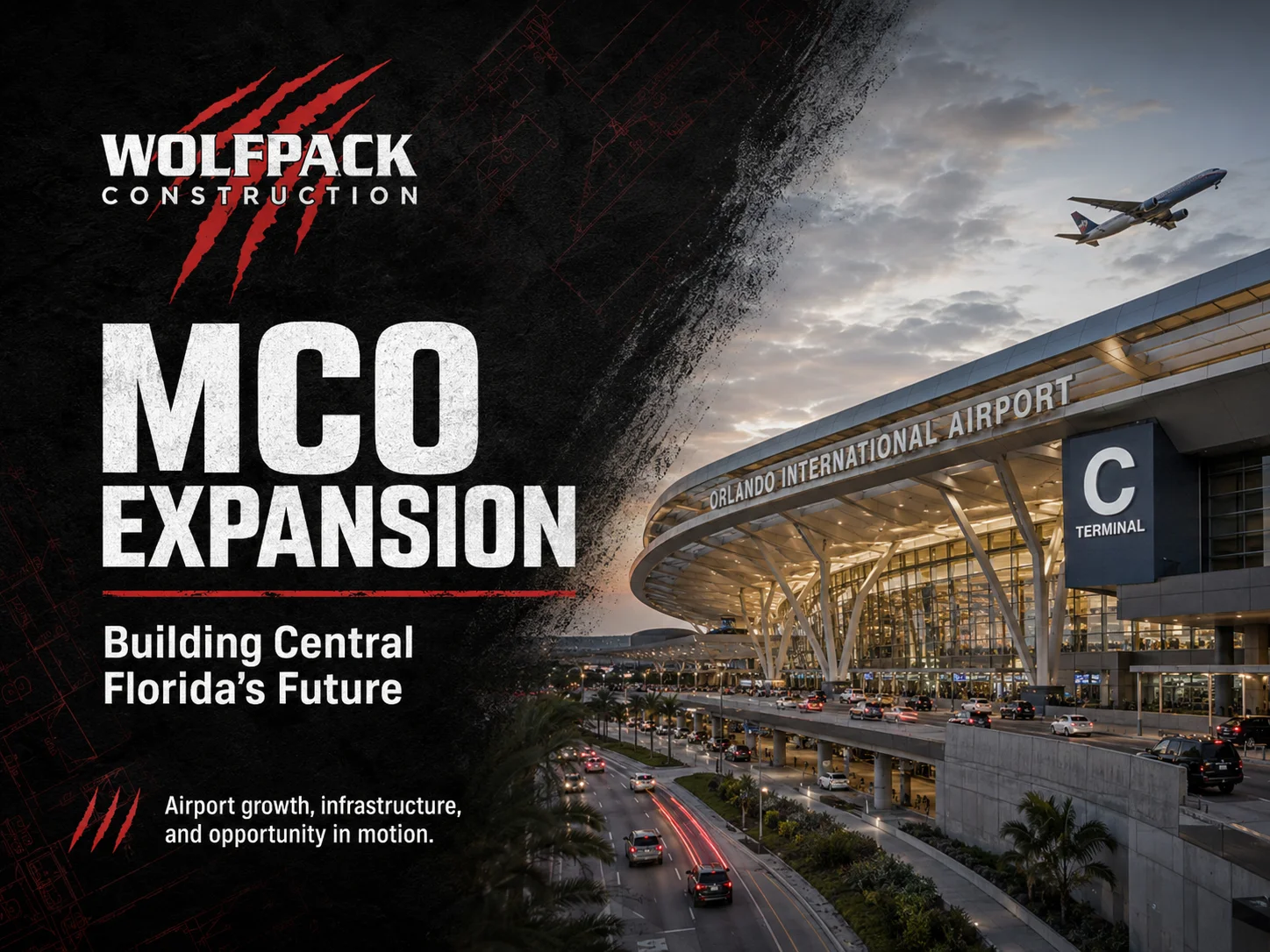
Terminal C represents one of the biggest infrastructure investments in Orlando’s recent history. Designed to support growing passenger demand, improve the traveler experience, and connect with other transportation systems, Terminal C is helping position MCO as a more modern and efficient airport.
The continued expansion of Terminal C is especially important because Orlando is not a typical airport market. MCO serves tourists, families, international travelers, convention guests, business owners, and local residents all at once. That creates a heavy demand on passenger flow, baggage handling, parking, transportation access, and airport services.
As Terminal C continues to grow, it strengthens Orlando’s ability to handle future travel demand while supporting the broader economy around it.
The Construction Behind the Passenger Experience
Most travelers only see the finished spaces: terminals, walkways, gates, parking garages, baggage claim, restaurants, lounges, and security areas. But behind those spaces is a massive amount of construction coordination.
Airport projects require careful planning because the work often happens in active environments. Crews must coordinate around passengers, airlines, security requirements, utilities, traffic, emergency access, delivery schedules, and strict safety standards.
That means every airport improvement depends on strong project management, sequencing, communication, and execution.
From structural work and mechanical systems to interior buildouts and parking improvements, MCO’s modernization reflects the type of complex construction planning required to support a fast-growing region.
How MCO Impacts Commercial Development
Airport growth often creates a ripple effect in surrounding markets. As passenger traffic increases, nearby demand can grow for hotels, restaurants, logistics facilities, rental car operations, retail spaces, office uses, and service-based businesses.
For Orlando, this is especially important because MCO connects directly to the region’s tourism and convention economy. Businesses near the airport benefit from access to travelers, employees, suppliers, and transportation corridors.
Infrastructure investment around MCO can also influence land value, redevelopment opportunities, and long-term commercial planning. Areas with strong access to airports, highways, rail, and major employment centers are often attractive to investors and business owners because they support movement and visibility.
In simple terms: when the airport grows, the surrounding business environment often grows with it.
MCO, Brightline, and Multimodal Connectivity
One of the most important parts of MCO’s future is connectivity. Orlando International Airport is not just serving air travel. It is becoming a larger transportation hub that connects air, rail, parking, rideshare, rental cars, shuttles, and road networks.
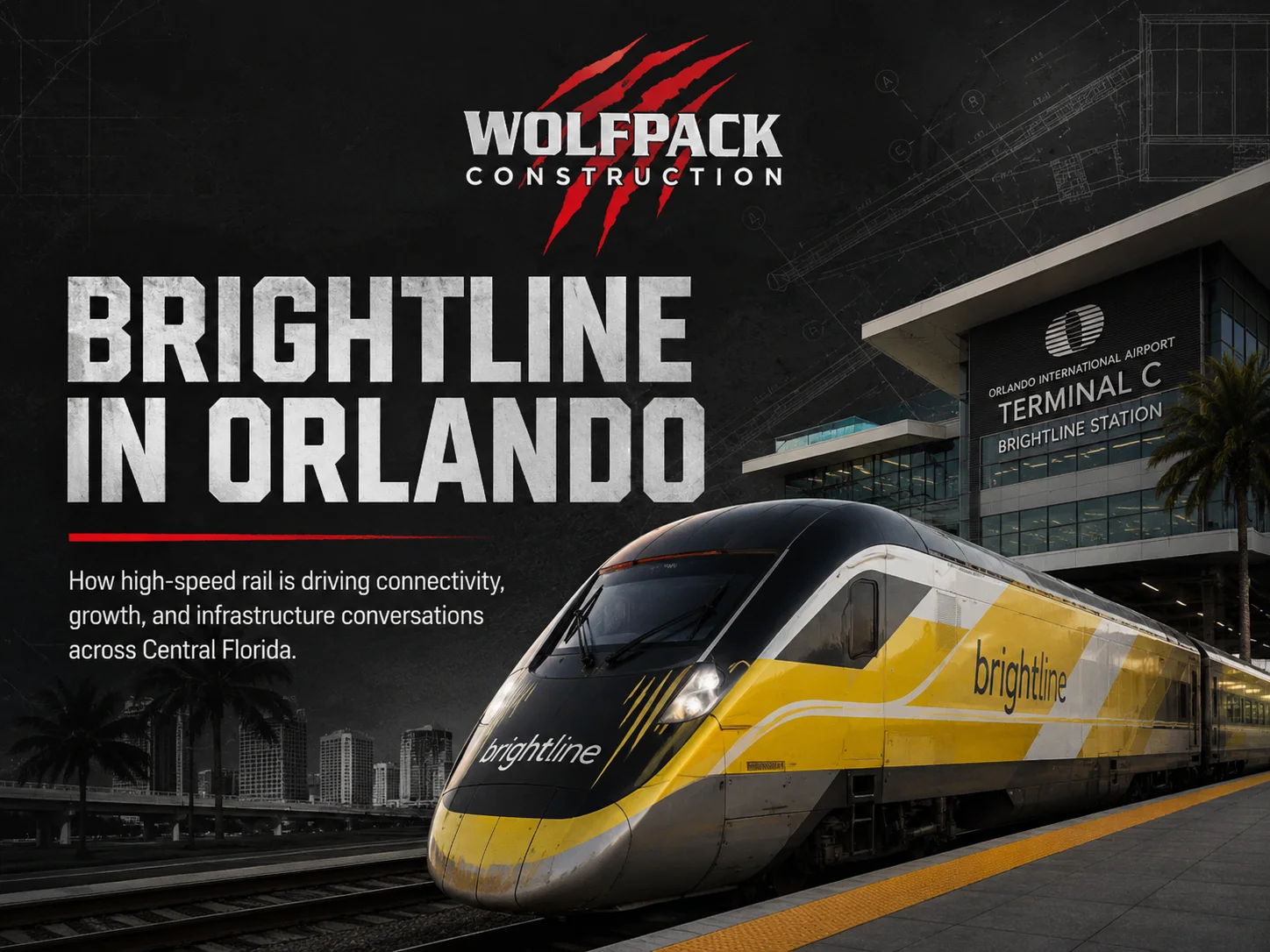
Brightline’s presence at the airport has added another layer to that story. By connecting Orlando to South Florida through passenger rail, MCO is becoming part of a broader statewide mobility network.
That matters because the future of infrastructure is not just about bigger buildings. It is about better connections.
The more efficiently people can move between airports, rail stations, hotels, business districts, attractions, and residential areas, the stronger Orlando’s growth potential becomes.
What This Means for Central Florida’s Future
MCO’s expansion is a clear reminder that Orlando is still growing. More passengers, more visitors, more businesses, and more development all require stronger infrastructure.
Airport modernization supports the future of tourism, but it also supports construction, commercial real estate, hospitality, transportation, and logistics. These improvements create opportunities for contractors, developers, investors, and business owners who understand where growth is happening.
As Central Florida continues expanding, the areas surrounding major infrastructure hubs like MCO will remain important. Access, visibility, transportation, and capacity will continue shaping where businesses choose to build, lease, renovate, and invest.
Final Thoughts
Orlando International Airport is one of the strongest examples of how infrastructure shapes economic growth. Its expansion is not just about moving more passengers. It is about preparing Central Florida for the next stage of development.
MCO connects Orlando to the world, but it also connects local businesses, construction opportunities, tourism demand, and long-term investment.
At Wolfpack Construction, we understand that growth requires more than vision. It requires planning, coordination, craftsmanship, and execution. As Orlando continues to build for the future, infrastructure projects like MCO show how strong foundations create stronger communities.